Mission
To transform Sri Lanka's coconut husk — a humble agricultural byproduct — into refined growing substrates and clean-burning fuel that professional growers and restaurants choose without compromise.
A decade ago, two founders set out from a single drying yard in Kuliyapitiya with a quiet conviction: that Sri Lankan coir could be world-class — not commodity. Today, Eco Coco International ships to thirty-plus countries, and we still hand-check every container before it leaves the port.
To transform Sri Lanka's coconut husk — a humble agricultural byproduct — into refined growing substrates and clean-burning fuel that professional growers and restaurants choose without compromise.
To be the most trusted coconut-products exporter from South Asia — synonymous with consistency, paperwork, and the kind of partnership that lasts more than one purchase order.
Craft over volume. Documentation as a default. Zero-waste production. Quiet partnership over loud sales. Five continents, one standard.
Every container of Eco Coco product passes through six steps inside our Madampe facility. Each step is documented, each batch is sample-tested, each shipment is traceable.
Coconut husks sourced from a 40-km radius of partner smallholder farms across the Kuliyapitiya belt. Same coconut belt, same families, since 2016.

Husks are mechanically defibred — coir fibre is separated from pith. The fibre goes to mats and rope; the pith becomes our growing media.

Pith is washed with low-EC water to reduce salts, then calcium-buffered. EC and pH are tested in-lab — every batch, no exceptions.

Sun-dried for 14–18 days on covered yards. Moisture content is brought below 20% — the spec European glasshouse buyers ask for.

Compressed into 5kg blocks, grow bags or open slabs. Labelled, palletised, certified, sealed.

FCL & LCL from Colombo to thirty-plus destinations. Our export desk handles documentation, fumigation and door-to-door coordination.

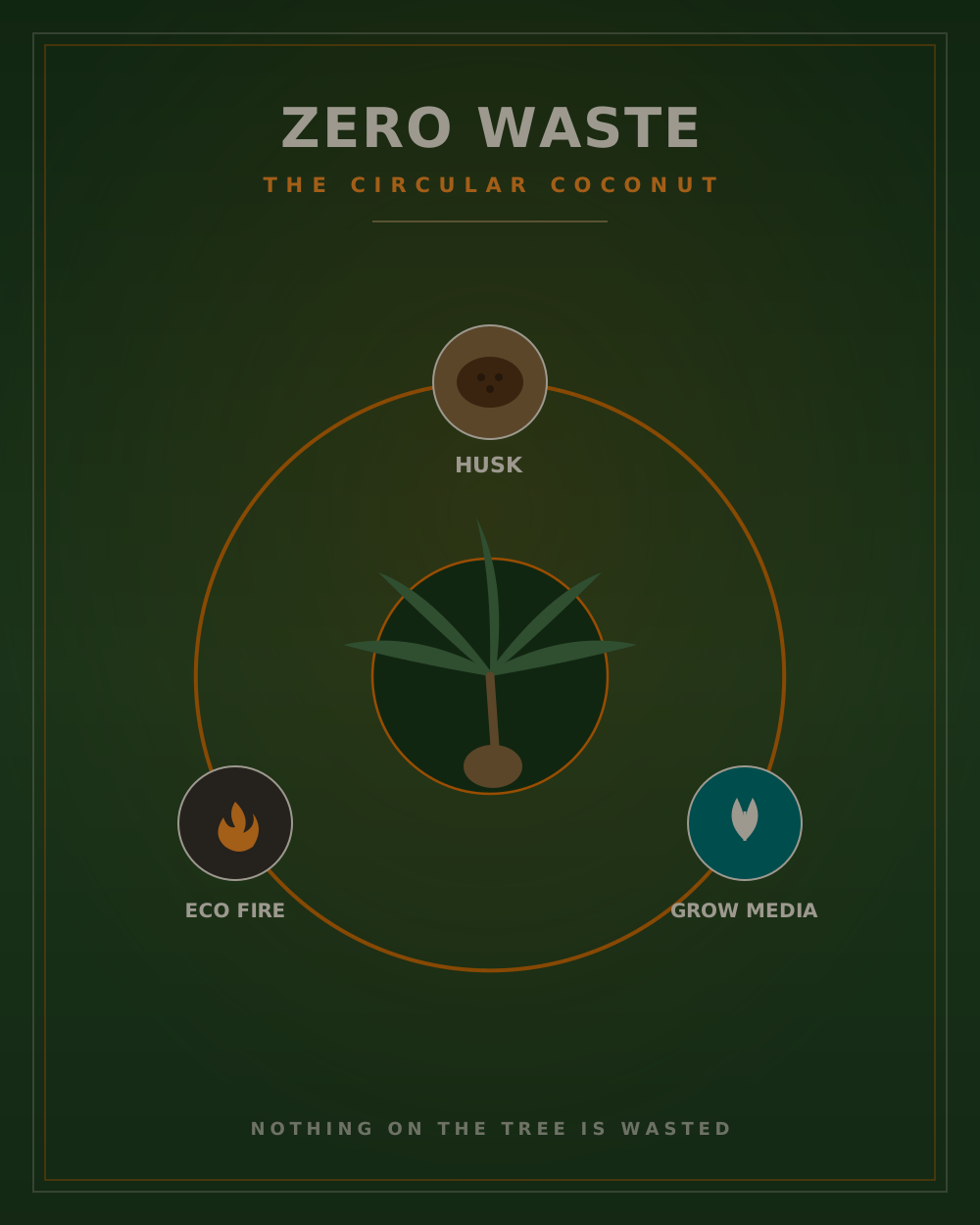
The same coconut that fed Eco Coco growing media powers Eco Fire charcoal. The fibre that doesn't become substrate becomes rope, mats or mulch. Nothing on the tree gets thrown away.